)
Systematic Behavioral Validation for Product Development Decisions
DECEMBER 24, 2025
From 9:00 to 11:00 a.m. yesterday, Bioptik Technology Co., Ltd. was invited to deliver a keynote lecture at the China Medical University. The lecture was presented by Dr. Chi-Wei Kuo, Deputy Manager of Bioptik’s Biomedical R&D Division, under the topic “Application Strategies and Data Interpretation Principles of Animal Behavior Analysis in Functional Testing.” Drawing on extensive CRO experience, the talk illustrated how animal behavioral studies can serve as a critical validation tool to support R&D decision-making and functional claims throughout the product development process.
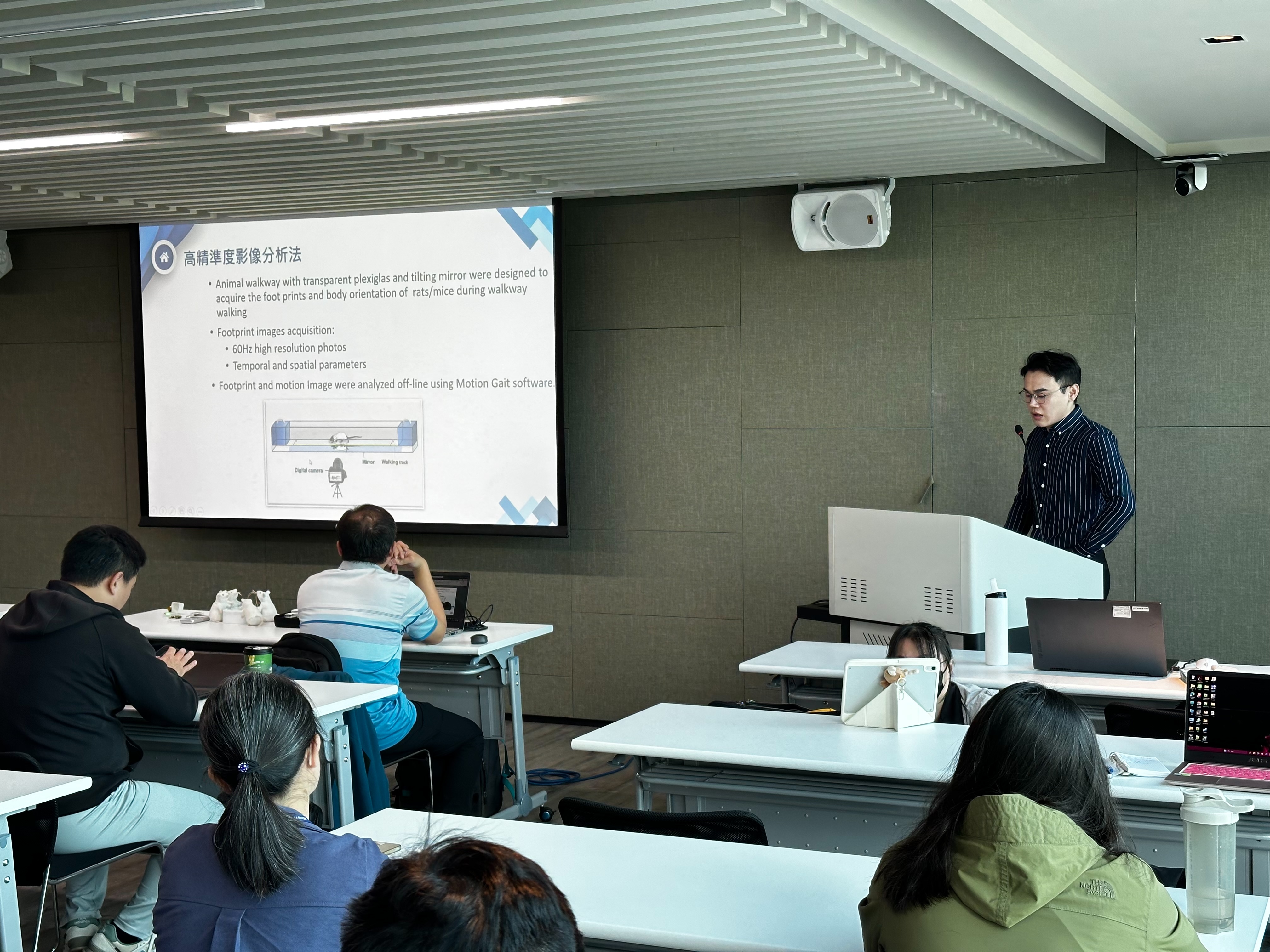
The lecture emphasized that,in the development of new drugs, nutraceuticals, and biomedical materials, animal behavior analysis should no longer be regarded merely as an endpoint result display. Instead, it should be positioned as a strategically planned, hypothesis-driven, and decision-supportive functional evaluation platform. Accordingly, functional testing should be designed using multi-directional and complementary behavioral assessment strategies to avoid the limitations of relying on a single test, which may fail to fully reflect a product’s true functional effects.
In current CRO practice, commonly applied and highly valuable behavioral evaluation pathways can generally be categorized into two main domains: motor impairment and cognitive impairment. These domains correspond to development targets such as neurodegenerative diseases, brain injury, metabolic disorders, and central nervous system regulation. By cross-validating results through multiple behavioral tests, researchers can assess the effects of products on motor coordination, learning and memory, and overall neurological function from different perspectives. This approach enhances data consistency and credibility, while helping to establish a comprehensive functional narrative that can be clearly understood by regulatory reviewers and collaborative partners.
In current CRO practice, commonly applied and highly valuable behavioral evaluation pathways can generally be categorized into two main domains: motor impairment and cognitive impairment. These domains correspond to development targets such as neurodegenerative diseases, brain injury, metabolic disorders, and central nervous system regulation. By cross-validating results through multiple behavioral tests, researchers can assess the effects of products on motor coordination, learning and memory, and overall neurological function from different perspectives. This approach enhances data consistency and credibility, while helping to establish a comprehensive functional narrative that can be clearly understood by regulatory reviewers and collaborative partners.
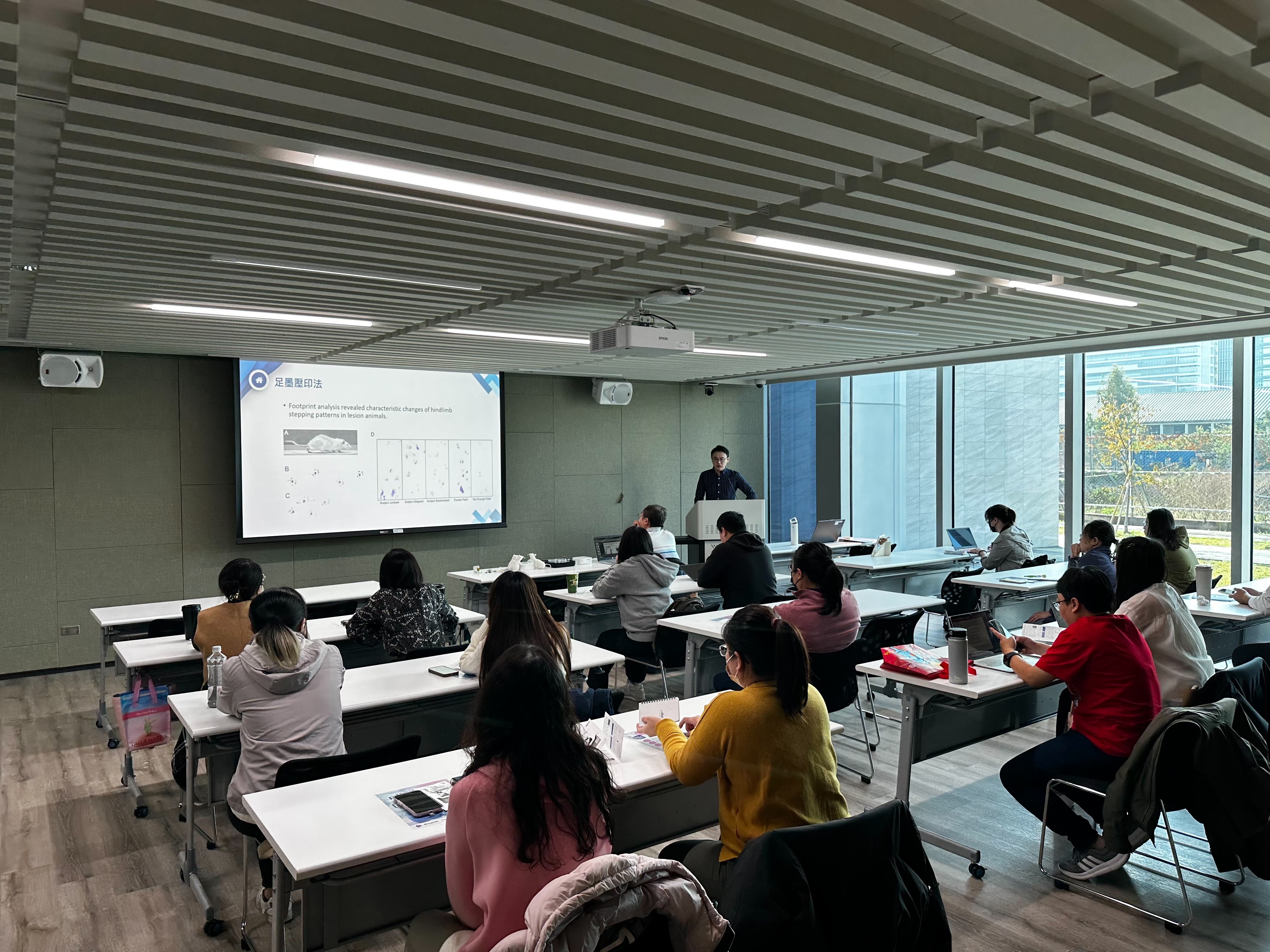
Dr. Kuo further highlighted that high-quality behavioral data depends not only on test execution, but also on robust and biologically meaningful data interpretation logic. In CRO practice, researchers must clearly distinguish whether observed behavioral changes arise from disease pathology or functional deficits, or from non-disease factors such as psychological stress, environmental maladaptation, or task avoidance by the animals. Without this level of interpretation, even statistically significant results may fail to reflect true functional status, potentially leading to misjudgments in R&D decisions and downstream development strategies.
From the perspectives of animal welfare and experimental design, the lecture also addressed key operational principles in CRO execution. It is generally not recommended to conduct excessive behavioral tests on the same cohort of animals within a short period (e.g., within one week). Overly intensive testing schedules can induce fatigue, stress accumulation, or behavioral adaptation, thereby compromising data quality and increasing experimental variability and repetition risk. To balance research efficiency with animal welfare, Bioptik recommends optimizing study designs by increasing the number of experimental groups and distributing test items across cohorts, ensuring comprehensive functional validation while minimizing interference with individual animals and adhering to ethical and welfare standards.
In closing, the lecture introduced the CRO services offered by Bioptik Technology, which include outsourced execution of animal behavioral studies, functional testing strategy planning, experimental design and data interpretation consulting, and multi-level validation framework recommendations. These services aim to help R&D teams establish clear, actionable, and highly interpretable validation pathways at early development stages, reducing experimental risk and enhancing overall R&D efficiency. Through continued collaboration between academia and industry, Bioptik remains committed to delivering practical, development-oriented animal behavior validation solutions and to serving as a trusted functional verification partner for research teams.
From the perspectives of animal welfare and experimental design, the lecture also addressed key operational principles in CRO execution. It is generally not recommended to conduct excessive behavioral tests on the same cohort of animals within a short period (e.g., within one week). Overly intensive testing schedules can induce fatigue, stress accumulation, or behavioral adaptation, thereby compromising data quality and increasing experimental variability and repetition risk. To balance research efficiency with animal welfare, Bioptik recommends optimizing study designs by increasing the number of experimental groups and distributing test items across cohorts, ensuring comprehensive functional validation while minimizing interference with individual animals and adhering to ethical and welfare standards.
In closing, the lecture introduced the CRO services offered by Bioptik Technology, which include outsourced execution of animal behavioral studies, functional testing strategy planning, experimental design and data interpretation consulting, and multi-level validation framework recommendations. These services aim to help R&D teams establish clear, actionable, and highly interpretable validation pathways at early development stages, reducing experimental risk and enhancing overall R&D efficiency. Through continued collaboration between academia and industry, Bioptik remains committed to delivering practical, development-oriented animal behavior validation solutions and to serving as a trusted functional verification partner for research teams.
Reference
-
For further information on Bioptik Technology’s animal behavior analysis, functional testing services, or CRO collaboration opportunities, please contact us via the following channels:
Tel|+886-3-397-1972
Address|B2-I43, Incubation Center,No. 259, Wenhua 1st Rd., Guishan Dist.,Taoyuan City 33302, Taiwan
Email|bmrd_service@bioptik.com.tw